
Home of the famous Bell witch legend now looks like a haunted ghost town
Maybe you’ve never heard of tiny Adams, Tennessee (population approximately 650), but odds are good that you’ve heard the tale of the Bell witch, the reportedly true story of a haunting that occurred in the vicinity of Adams in the years from 1817-1821. The mysterious paranormal activities inside the Bell house were witnessed and verified by many people outside the Bell family, including Andrew Jackson. The tale of the Bell witch has been the topic of countless stories, TV programs, and horror films.

Cover of Authenticated History of the Bell Witch, published in 1894 by newspaper editor Martin V. Ingram
Adams later became the home of the first church west of the Cumberlands, as well as a train depot, post office, and assorted other businesses. Despite nearly total destruction during the Civil War, Adams bounced back and became a bustling community, benefiting from its position close to the railway and centered on old Highway 41 — once the major route from Chicago to Miami. After modern interstate highways opened, diverting travelers and business away from town, Adams went into a decline. Today, its old downtown is little more than a handful of decaying old buildings — a ghost town.
Visitors to Adams today can see a reproduction of the old Bell family house, where the legendary haunting occurred, and visit a tourist attraction called the “Bell Witch Cave.”
Pictures of old downtown Adams
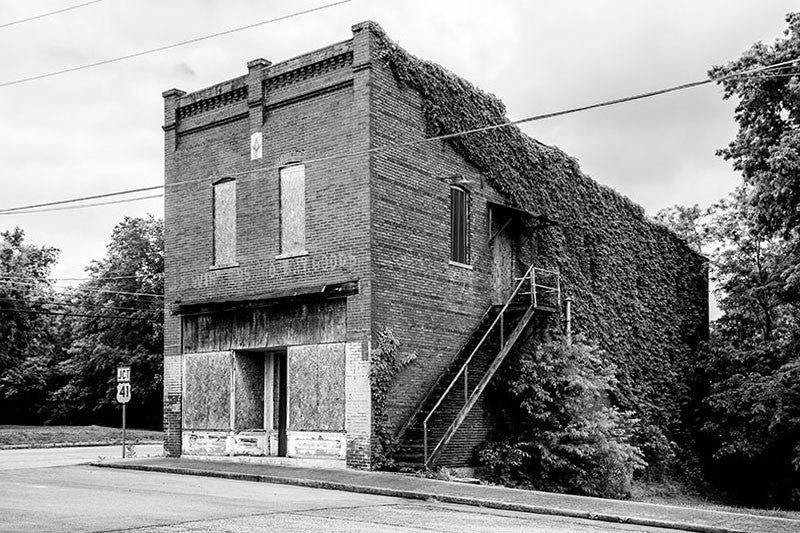
Featured photograph (above): J.E. Winters Co. Dry Goods building. Buy a fine print here.
The Masonic stone on the front of the building shows it built in October 1897.
The Tennessean newspaper in Nashville featured a news item regarding this business in November, 1899: "A stave factory, conducted by J. M. Wilder, will be in operation at Adams in a few days. J. E. Winters, a leading dry goods merchant of the town, has taken the contract to furnish the white oak timber, a large quantity of which has already been hauled to the lumber yard."

Ivy on an Abandoned Brick Building – Adams, Tennessee. This is a side-view of the J.E. Winters building. Click to buy a black and white photograph.
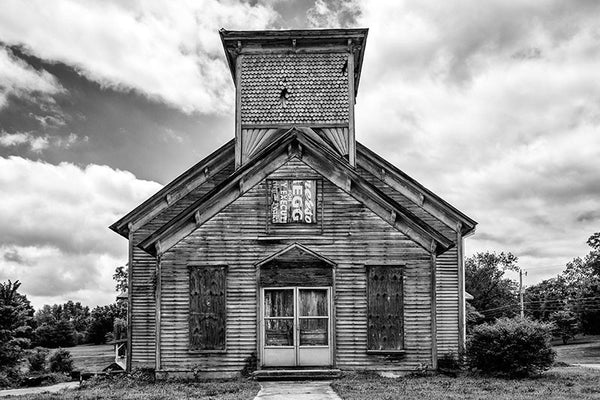
Abandoned and Boarded-up Church - Adams, Tennessee (RQ0A5274). Click to buy this black and white photograph. On the day this photograph was taken, a possessive mockingbird, having nested in the steeple, loudly protested Keith's presence.
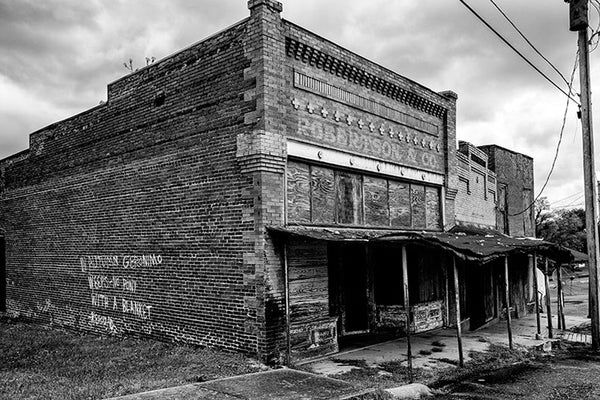
Abandoned storefronts in the old downtown of Adams, Tennessee. Click to buy a fine black and white print.

Robertson and Co. Storefront Sign in Adams Tennessee. Click to buy a fine photograph.

Brick Wall with Ivy in Adams, Tennessee, a black and white photograph by Keith Dotson. Click to buy a fine print.

Abandoned Storefront Detail (RQ0A5246). Click to buy a fine art print.

Abandoned Brick Building - Adams, Tennessee (RQ0A5235). Buy a fine art print.

Ivy-Covered Barn, Adams, Tennessee (RQ0A5217)

Peeling Paint on a Post in Downtown Adams (RQ0A5243)

Cracked Paint Under the Awning in Downtown Adams (RQ0A5265)

Railroad Bridge in Adams, Tennessee (RQ0A5293). Click the photograph to buy a fine art print.

Abandoned Church and Broken Sidewalk in Adams, Tennessee.
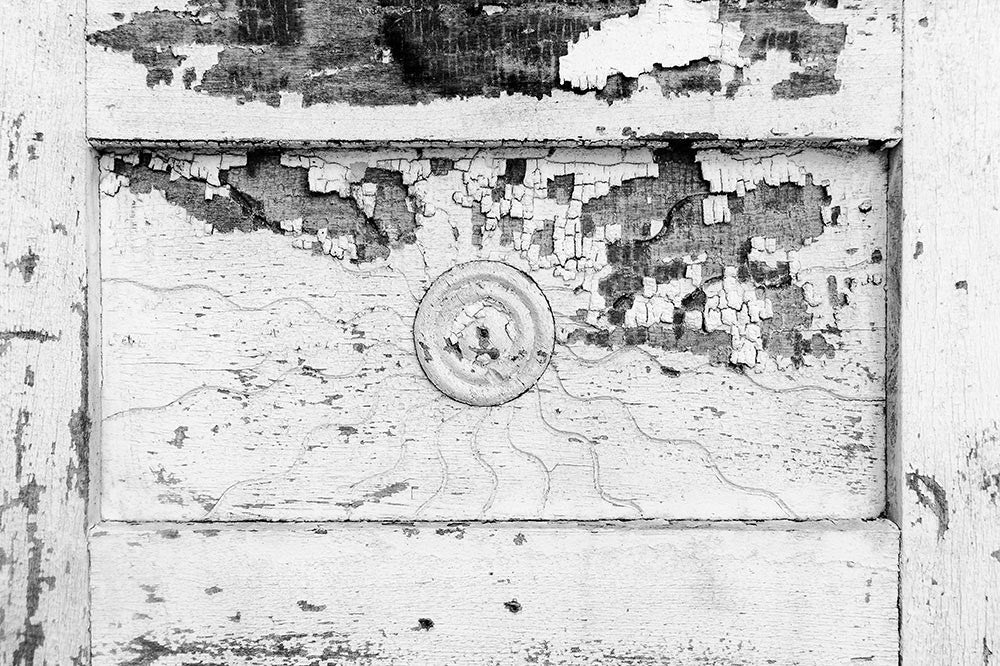
Detail of woodwork on the front doors of the J.E. Winters Co. Dry Goods building in Adams, Tennessee. Click to buy a fine black and white photographic print.
Thanks for reading!
See also Keith's blog post about Southern haints and ghosts
Comments
Newton James Brooks Jr. (Jim):
As a boy I had several of the old people in Adams tell me that it had been burned by the Union Army during the Civil War. I even had the three buildings that were not burned pointed out to me. No one claimed to know why those three buildings (dwellings) were not burned, tho there was speculation about one dwelling as to why it was spared. That was a building on the outskirts of Adams, on the road to Clarksville. It was a small two story building. The bottom floor had been a grocery store. The second floor had been the home of the man who owned and ran the grocery. Early in the war, the owner of the store joined the Confederate Army. Later, the Union Army occupied Adams and the store owner left with the Confederate troops. His in laws came and stayed with his wife and children. His father in law was a Baptist minister. The story is that in addition to helping his daughter with the store and with her children, her father would go into Adams and visit with the Union soldiers stationed there. He would pray and counsel with them and would write letters home for those who did not read and write well. Speculation was that that was why that home/store was not burned with the rest of Adams.
One of the other two homes was on the west side of Adams. It was where the railroad cut going out of town was. Union soldiers were also camped near it and supposedly became friendly with the owner. That home burned not to many years ago.
The third house is the only one of the three still standing,. It was smaller then. Only part of it had been built. The owner, I heard, was also friendly with the Union officers and sometimes had the Union commander into his home as a guest for meals. I was told that he was actually trying to spy for the Confederacy..
The Confederates built a small fort at Adams to help guard the railroad. It was on the west side of town overlooking the railroad. They named it Fort Redmond. It was abandoned by the Confederate troops some two weeks after Clarksville, Tennessee was captured by the Union army. The Union army occupied and garrisioned the little fort, which they renamed Red River Blockhouse Number One. There were two small battles at Adams at later date. Both were won by the Confederates, who temporarily recaptured the fort. It was thought by some of those I spoke with that this may have been why Adams was burned by the Uniion Army.
My father, who had been stationed for a time on Guam during WWII. viewed the remains of the fort in 1947. He had seen Japanese fortifications on Guam at the close of WWII. He said at Ft. Redmond there were the remains of a Crows Nest, a wooden palisade and two lines of earth works, entrenchments forming part of the fortifications. Tho the Confederates began the fort, after the Union army captured it, they (the Union army) took slaves from a neighboring farmer and used the labor of the slaves to add to and strengthen the fort.
Jan 14, 2026
Newton James Brooks Jr. (Jim):
As a boy I had several of the old people in Adams tell me that it had been burned by the Union Army during the Civil War. I even had the three buildings that were not burned pointed out to me. No one claimed to know why those three buildings (dwellings) were not burned, tho there was speculation about one dwelling as to why it was spared. That was a building on the outskirts of Adams, on the road to Clarksville. It was a small two story building. The bottom floor had been a grocery store. The second floor had been the home of the man who owned and ran the grocery. Early in the war, the owner of the store joined the Confederate Army. Later, the Union Army occupied Adams and the store owner left with the Confederate troops. His in laws came and stayed with his wife and children. His father in law was a Baptist minister. The story is that in addition to helping his daughter with the store and with her children, her father would go into Adams and visit with the Union soldiers stationed there. He would pray and counsel with them and would write letters home for those who did not read and write well. Speculation was that that was why that home/store was not burned with the rest of Adams.
One of the other two homes was on the west side of Adams. It was where the railroad cut going out of town was. Union soldiers were also camped near it and supposedly became friendly with the owner. That home burned not to many years ago.
The third house is the only one of the three still standing,. It was smaller then. Only part of it had been built. The owner, I heard, was also friendly with the Union officers and sometimes had the Union commander into his home as a guest for meals. I was told that he was actually trying to spy for the Confederacy..
The Confederates built a small fort at Adams to help guard the railroad. It was on the west side of town overlooking the railroad. They named it Fort Redmond. It was abandoned by the Confederate troops some two weeks after Clarksville, Tennessee was captured by the Union army. The Union army occupied and garrisioned the little fort, which they renamed Red River Blockhouse Number One. There were two small battles at Adams at later date.
Jan 14, 2026
Jim Brooks:
Very nice old pictures. I grew up in Adams. And yes, it ws burned by the Federal Army duing the War Between the States. Only three buildings were left standing. One still stands today. One of the other two collapsed perhaps 20 years ago. The other one I think caught fire and burned a few years earlier.There were two small battles at Adams during the WBTS.The Confederates, aided by local farm boys, won both battles.
As a boy, I often asked the old pepole who had heard stories about the Bell Witch from family members who were living there at the time, if they believed those things really happened. Most would refuse to answer but some would say yes. Some said no, but later I might hear them discussing the Bell Witch with family or friends and they would be saying how they believed those things did happen. I often heard some of those same people telling strangers than they did not believe those things ever happened. They did not want to admit to strangers that they believed in the Bell Witch.. The stories you heard depended on how much they trusted you not to laugh at them. The stories I wanted to hear were the ones told by old people who had heard those stories from relatives were were there and saw and heard those things when thye happened. I had ancestors who were close friends and near neighbors to the bells. Though I knew family members who had heard those stories from grandparents and great grandparents who saw and heard those things, it was hard to get them to repeat what they had been told,. They said to do so glorified the devil. When I could get such a person to repeat what eyewitnesses hAD TOLD THEM, THEY WOULD ONLY TALK FOR A MINUTE OR TWO. They would begin to look scared and wou;ld say it was best not to talk about it anymore that day. Some other time, they would say, but no more that day. One thing several family members told me was that both John Bell and his best friend, my ancestor James Johnston, suspected the school teacher of being involved with the Bell Witch in some way.
Jan 31, 2024
Leave a comment